A Scene Is a Network, Not a List of Bands
See how a local music scene grows through recurring ties between artists, listeners, organisers and spaces, and how to notice those connections taking shape.
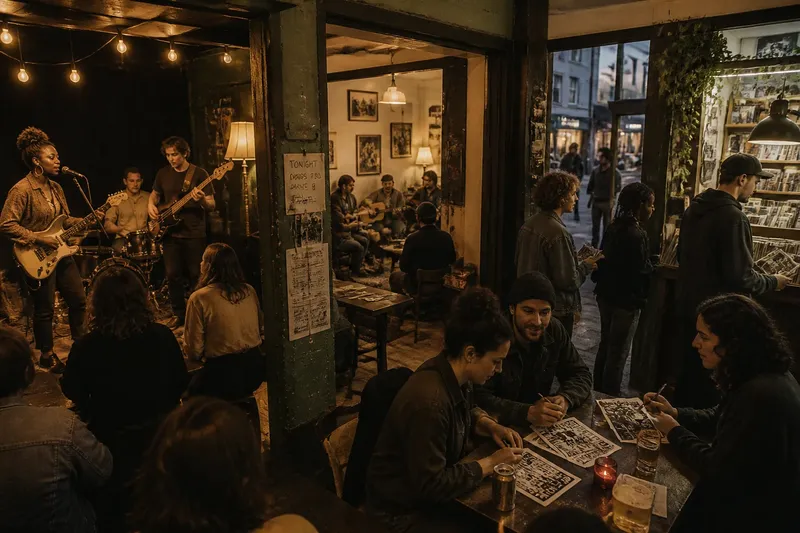
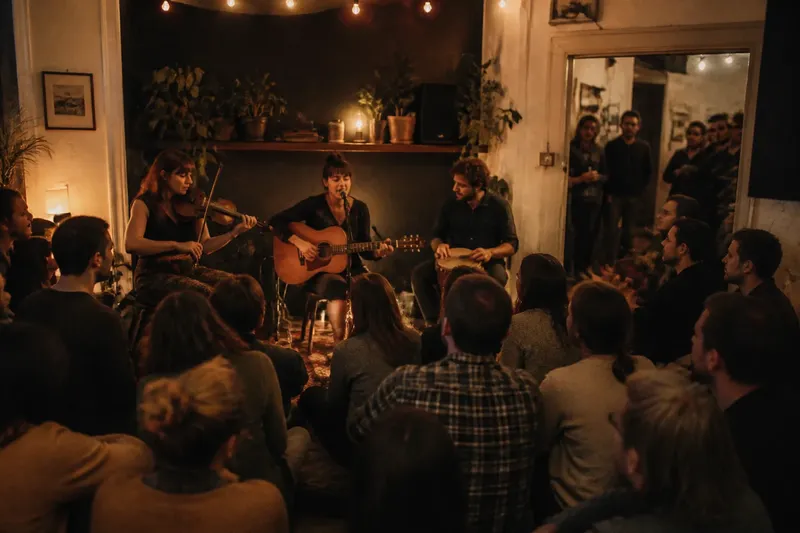
A local music scene becomes recognisable when the same people keep meeting across different nights, rooms and roles. A list of bands can tell you who plays; a network shows how a singer ends up on a bill with a new drummer, how an audience follows a promoter to another venue, and how a small room becomes part of the city’s musical life.
Think of a scene as a set of recurring connections rather than a club with a membership list. The useful question is not simply who belongs, but what relationships are being made, repeated and widened. You can trace those ties over a season without turning them into a league table or mistaking visibility for importance.
Start with recurring ties
Begin by noticing who encounters whom, and in what capacity. A performer may share a bill with another act, attend a night as a listener, help carry equipment, or pass a booking contact along. An organiser may host different styles in one room, while a local artist lends a voice or instrument to someone else’s recording. Each connection adds another route through the scene.
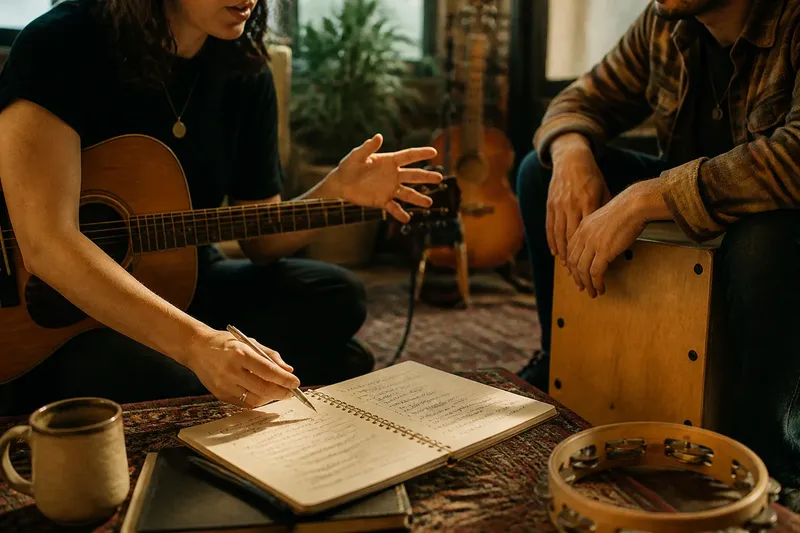
For a week, keep a private note after the gigs, rehearsals or community events you already attend. Record the event, the people and groups involved, and the relationships you actually observed: a shared bill, a return visit, a guest appearance, a conversation that led to a future date. Avoid guessing about friendships or motives from a photograph or social post.
Say you attend a Thursday gig where a three-piece band shares the bill with a solo songwriter. The next week, you notice the songwriter helping at a benefit show organised by the same promoter, and one of the band members playing in another act. Those repeat links suggest a network forming across events; they do not mean every attendee knows one another or shares the same taste.
Follow people between roles
Musical life is often sustained by people who move between roles. A guitarist might book a night, a listener might make posters, and a venue worker might introduce two performers who have never met. These shifts matter because they connect parts of the scene that a performer-only roster leaves out.
Over the next few weeks, pay attention to who makes events possible as well as who appears on stage. Look for recurring organisers, sound engineers, volunteer photographers, independent radio presenters, rehearsal-space coordinators and people who host all-ages gatherings. Ask whether the same names crop up in different settings, while leaving room for quiet contributions that are not promoted online.
Keep the picture broad. A person’s presence at several events does not make them a spokesperson for a scene, and a public profile does not reveal the whole set of relationships behind it. Treat your notes as observations, not a definitive map of who matters.
Notice how spaces connect
Rooms help relationships recur, but a scene does not belong to one venue. A pub back room, arts centre, rehearsal studio, record shop and library meeting space may each support different kinds of contact. Some are places to perform; others are where people exchange flyers, find collaborators or learn about the next gathering.
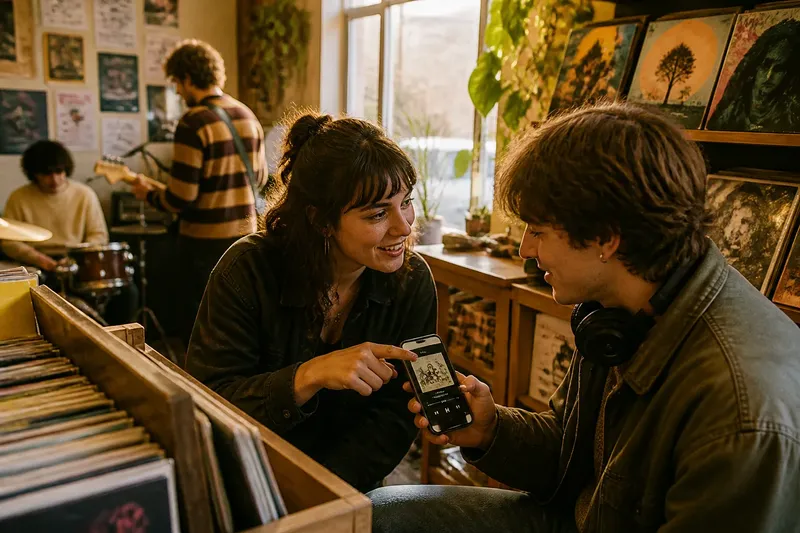
Across a month, notice which people and groups appear in more than one space. A promoter might take a series from a basement room to a community hall, or a record shop might host an informal listening night connected to a nearby gig. These movements can reveal shared musical life that a single venue’s programme cannot show.
Also notice the limits of each connection. A room may be welcoming to established acts but difficult to reach by public transport, or an event may be promoted mainly through channels unfamiliar to newcomers. You do not need to judge an entire scene from one night; note the practical conditions that shape who can return.
Let the pattern emerge
At the end of a month or season, read your notes for repeated links rather than counting names. Which organisers connect different performers? Which spaces bring together people who otherwise appear in separate circles? Are listeners returning, contributing, or moving between events? A few carefully observed connections can explain more than a long list of acts.
Imagine a neighbourhood where a monthly noise night, a folk session and a youth-run showcase seem unrelated. Over several weeks, you notice one local engineer working at all three, a community radio presenter sharing recordings from each, and a handful of listeners attending more than one. The expected observable result is a clearer picture of the links between those events, not proof that they form a single unified scene.
When a connection seems important, look for another occasion that could confirm the pattern. A one-off shared bill may be coincidence; repeated collaboration or audience overlap is a stronger clue. Keep uncertainty visible, especially when an event is new or poorly documented.
How do scene connections work?
What makes a local music scene recognisable?
Recurring relationships make a scene easier to recognise: people meet again, collaborate, attend one another’s events and carry information between spaces. Shared sounds or a common postcode may contribute, but neither alone explains how a scene holds together.
Does a scene need one main venue?
No. A scene can be linked across several rooms and informal gathering places, with people carrying connections from one setting to another. A venue may be central to a particular group without representing everyone involved.
How can I notice connections without making assumptions?
Write down observable events, such as a shared bill or a repeat appearance, and separate those from interpretations about friendship, influence or belonging. If a pattern matters to your understanding, look for it again in another setting.
Can a scene include people who do not perform?
Yes. Organisers, listeners, technicians, promoters and people who share information can all help connect musical activity. Their contribution may be less visible than a performance, so notice what they do rather than treating stage time as the only measure.
Keep the map open
A map of a scene is useful only if it stays open to change. New performers arrive, a regular night pauses, and familiar listeners take on organising work; meanwhile, some contributions remain private or local rather than online. Revisit your notes after another stretch of events and adjust the picture instead of forcing every person or gathering into a fixed category.
For anyone trying to understand a local music scene, start with the next connection you can actually observe: who returns, who helps carry an event forward, and where those people meet again. That modest habit reveals a living network while leaving space for the scene to become something new.